Who this guide is for
Teams and individuals who want less coordination overhead and better calendar habits.
Use this guide when
Stop the endless email back-and-forth. Here's how to coordinate meeting times without a single reply-all.
The email thread. We've all been there. You send a proposed time. Someone replies with a conflict. You counter. They counter back. Three days later, you've exchanged eleven emails just to find a 30-minute slot.
If scheduling without the email thread sounds like a dream, you're not alone. It's one of the most common frustrations for teams everywhere. And here's the thing — it doesn't have to be this complicated.
The Problem with Email-Based Scheduling
Think about what actually happens when you try to schedule via email:
- •You draft a message with 3-4 time options
- •You wait for replies from everyone
- •Someone replies-all with their availability (which conflicts with someone else)
- •You play detective, trying to find the overlap
- •You send a follow-up confirming the time
- •Someone else replies late, saying they can't make it
This process can take days. For a meeting that lasts 30 minutes.
The problem isn't that people are bad at responding — it's that email was never designed for this. It's a terrible tool for collaborative time finding. You're essentially playing manual calendar Tetris while everyone else is busy.
What Scheduling Without Email Actually Looks Like
Imagine this instead:
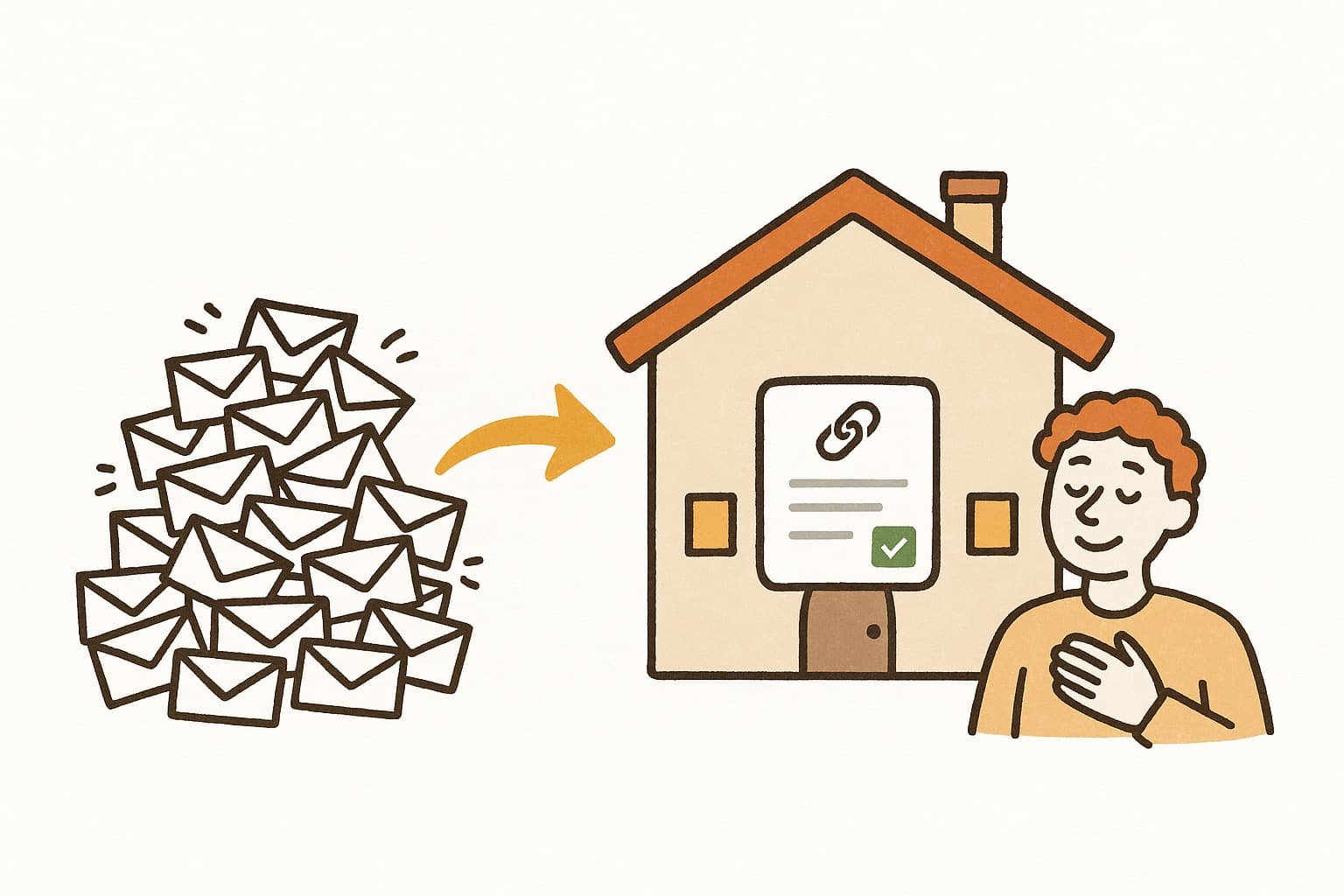
You create a poll. You add your proposed times. You send a link to your team. Everyone clicks their availability. Within hours, you see exactly when everyone is free. You pick the winner. Done.
No reply-all. No back-and-forth. No "sorry, I missed that email."
That's scheduling without the email thread. It's faster, clearer, and less frustrating for everyone involved.
Why It Works Better
The shift from email to a polling system works better for three reasons:
Visibility. Everyone sees the same options at the same time. No more digging through email chains to find the latest response.
Speed. A good scheduling poll takes 30 seconds to create. Responses come in within hours, not days.
Simplicity. One link. One place to vote. One final confirmation. That's it.
How to Make the Switch
If you're ready to stop scheduling via email, here's how to do it:
- •Use a scheduling poll tool — WhenWorks lets you create a poll in under a minute, no account needed
- •Keep it simple — Offer 3-5 time slots, not 20
- •Set a clear deadline — Tell people when you'll pick the winning time
- •Share via chat, not email — Send the link in Slack, Teams, or Discord instead of starting another email chain
The Bottom Line
Your time is too valuable to spend it playing calendar detective. Scheduling without the email thread isn't just possible — it's how smart teams work today.
Stop the back-and-forth. Create a poll. Get on with your actual work.
Try WhenWorks free at whenworks.cc — no signup required to vote.
Before you act on this advice
- Optimize for fewer messages and fewer context switches.
- Use a repeatable process instead of rebuilding the plan every week.
- Protect focus time by limiting unnecessary scheduling back-and-forth.
Common traps to avoid
- A cleaner calendar is not the same thing as a more realistic calendar.
- Protecting focus time only works when the surrounding team norms support it.
- Small process changes beat ambitious productivity resets that disappear after one week.
Best next step
Start with one recurring calendar problem and redesign that pattern first rather than trying to optimize everything at once.
Why you can trust this page
Productivity pieces focus on scheduling as an operational habit: protecting calendar time, reducing coordination overhead, and making recurring planning easier to repeat.
Public guides on WhenWorks are tied to the product and support context behind the site. We explain our editorial process publicly so readers can judge whether the page feels complete and trustworthy for their use case.
Want the policy context behind this article? Review our editorial standards or contact the team.
Questions people usually ask
How do I tell if a calendar change is helping?
Look for fewer interruptions, clearer priorities, and less time spent rescheduling or cleaning up after poor coordination. The benefit should show up in actual working time, not just aesthetics.
What makes productivity advice stick?
Simple rules, repeated practice, and team norms that support the behavior. A clever tactic is not durable if your surrounding system keeps working against it.

