Who this guide is for
Readers trying to make group scheduling simpler and more reliable.
Use this guide when
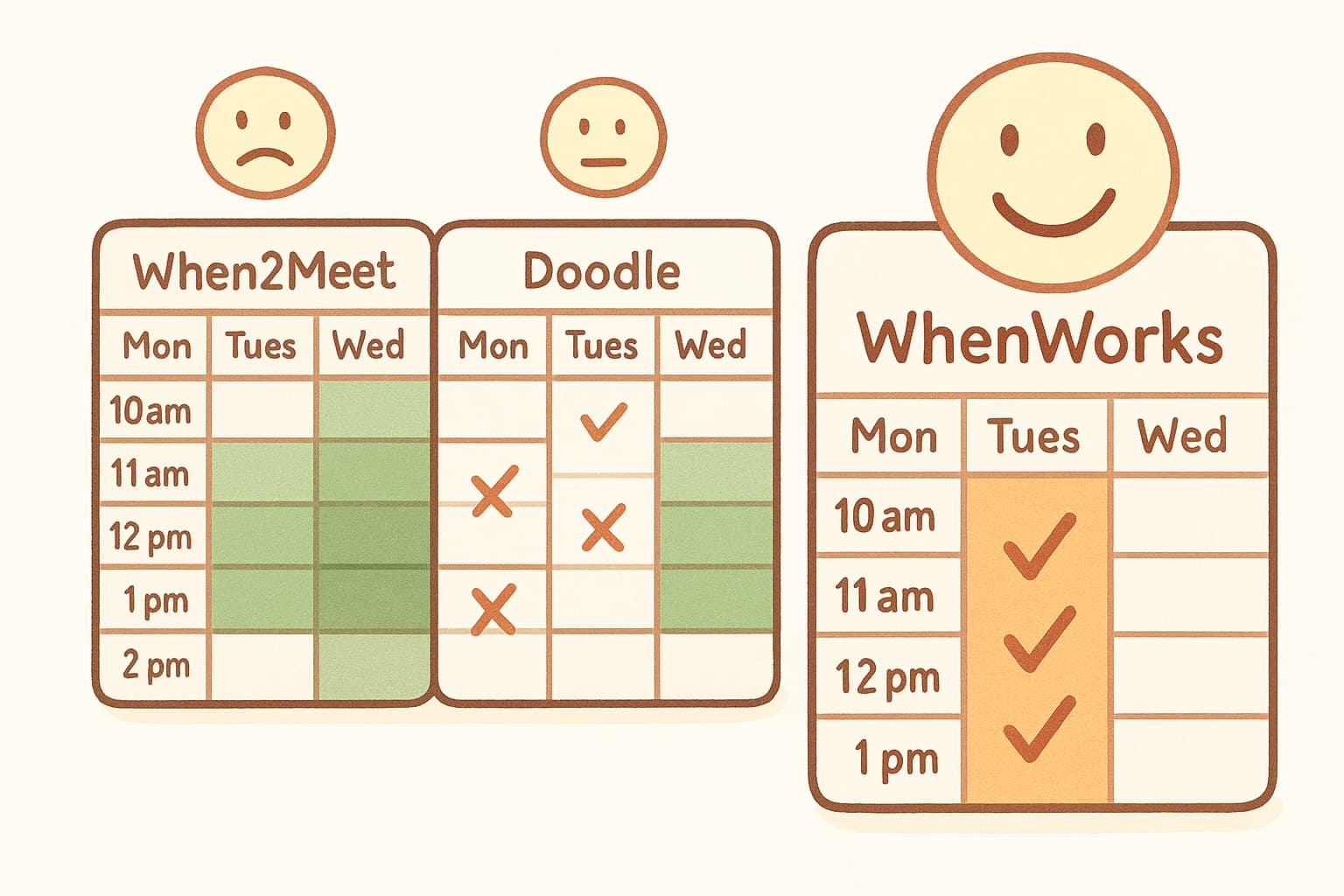
Comparing When2Meet vs Doodle vs WhenWorks? See which scheduling tool wins in 2026 for speed, ease of use, and participant experience.
Choosing a scheduling tool shouldn't require its own meeting. But with dozens of options on the market, finding the right one for your specific needs takes research. Three tools consistently surface in scheduling conversations: When2Meet, Doodle, and WhenWorks. Each has strengths and weaknesses that matter depending on your use case.
Let's break down how these three compare across the dimensions that actually matter: setup speed, participant experience, features, and pricing. If you already know Doodle is your main benchmark, the dedicated Doodle comparison goes deeper on that choice.
When2Meet: The Old Standby
When2Meet has been around since 2008, and it shows. The interface is dated but functional. It excels at one specific use case: finding when a group of people are all free across a date range.
Strengths: Simple grid interface, no account required to vote, handles multi-day availability well.
Weaknesses: Dated design, limited customization options, no mobile optimization, basic feature set hasn't evolved in years.
When2Meet is fine if you need the bare minimum and don't care about aesthetics or modern conveniences. But it feels increasingly out of step with contemporary expectations.
Doodle: The Brand Name
Doodle pioneered scheduling polls and remains the most recognized name in the space. But recognition doesn't always mean best-in-class.
Strengths: Feature-rich, integrates with calendars, established brand that some participants recognize.
Weaknesses: Aggressive upselling, often requires accounts to vote, increasingly complex interface, free tier severely limited, slow load times.
Doodle works if you need advanced features and don't mind paying. But the friction it creates for participants often outweighs the benefits.
WhenWorks: The Modern Alternative
WhenWorks takes what works from existing tools and strips away the friction. Clean design, zero participant barriers, and thoughtful features that actually help.
Strengths: No accounts required, sub-minute setup, clean modern interface, optimized for mobile, free tier that's genuinely usable, real-time updates.
Weaknesses: Newer product with smaller brand recognition (though this is changing rapidly).
WhenWorks prioritizes the experience for both organizers and participants. The result is higher response rates and faster scheduling decisions.
The Verdict
For simple group scheduling in 2026, the choice is clear. When2Meet is showing its age. Doodle has lost its way with complexity and upsells. WhenWorks delivers the modern, friction-free experience users actually want.
Try all three and decide for yourself—start with a free WhenWorks poll.
Before you act on this advice
- Look for the smallest process that still gets you a confident answer.
- Keep the group experience simple for first-time participants.
- Document the final outcome so nobody has to guess what was decided.
Common traps to avoid
- Simple systems work best when the organizer explains them clearly from the start.
- Over-customizing the process often adds work without improving outcomes.
- Make one decision well before trying to optimize every part of the workflow.
Best next step
Use the simplest version of this advice on your next real coordination task and then improve it based on what actually happens.
Why you can trust this page
Our editorial approach centers on real scheduling decisions, not generic productivity filler.
Public guides on WhenWorks are tied to the product and support context behind the site. We explain our editorial process publicly so readers can judge whether the page feels complete and trustworthy for their use case.
Want the policy context behind this article? Review our editorial standards or contact the team.
Questions people usually ask
What is the best next step after reading this article?
Apply the advice to one real scheduling scenario soon while the ideas are still concrete. Practical use is the fastest way to see what actually fits your workflow.
How should I adapt this guidance to my situation?
Keep the principles and simplify the process around your real constraints, such as group size, urgency, and whether you control the calendar or need consensus.